This post is the start of a series which attempts to show off mostly just the insects and arachnids of our family’s week in Virginia from May 17th to the 23rd as comprehensively as possible (within reason, of course). This series is an experiment and is going to be a little different than usual and probably a bit more messy. I decided to split up the trip into several posts because this load had over 400 pictures in it total, and one post with all 400 in it would have been just way too overwhelming. I will probably not attempt to identify all of the insects this time, as there are just so many!
The vacation house we stayed at was a charming place situated in a very unique spot for insect finding. Deep in a relatively sparse pine wood with very little undergrowth, the property concentrated most of the common insects to be found on the few and low growing bushes and plants. This was a great opportunity for me to photograph some of the common but hard-to-spot insects that are spread out over our huge undergrowth surface area here at home. The best part of this house though was that it was situated right next to a freshwater pond narrowly separated by a small strip of land from a niche of the Chesapeake Bay. The freshwater lent a lot more diversity to the property, and allowed us to see a lot of aquatic-related insects that you will see soon.
I greatly enjoyed the chance on this vacation to devote a lot more time to photography, but because there was just so many new things to see I did not spend as long on each subject. Unfortunately, I discovered as I processed these pictures that all too often I did not devote enough time to many subjects (it was usually a hit-and-run situation) and for many of them I did not even get one picture in good focus. Other times I did not get clear pictures of all the angles I was trying to capture on a certain specimen. Nevertheless, I am including the poor pictures when I have to in order to tell the whole story of our trip. Hopefully the relatively small thumbnail size will help to hide the poor focus or composition of most of the images.
This week we will be looking at as much of the fly (Order Diptera) diversity we observed on the trip as I could capture. As you may have picked up, Diptera is my personal favorite order and my area of expertise, so please pardon my probable rambling on a bunch of boring-looking flies. I will do my best to do justice to the other groups as well. 😉
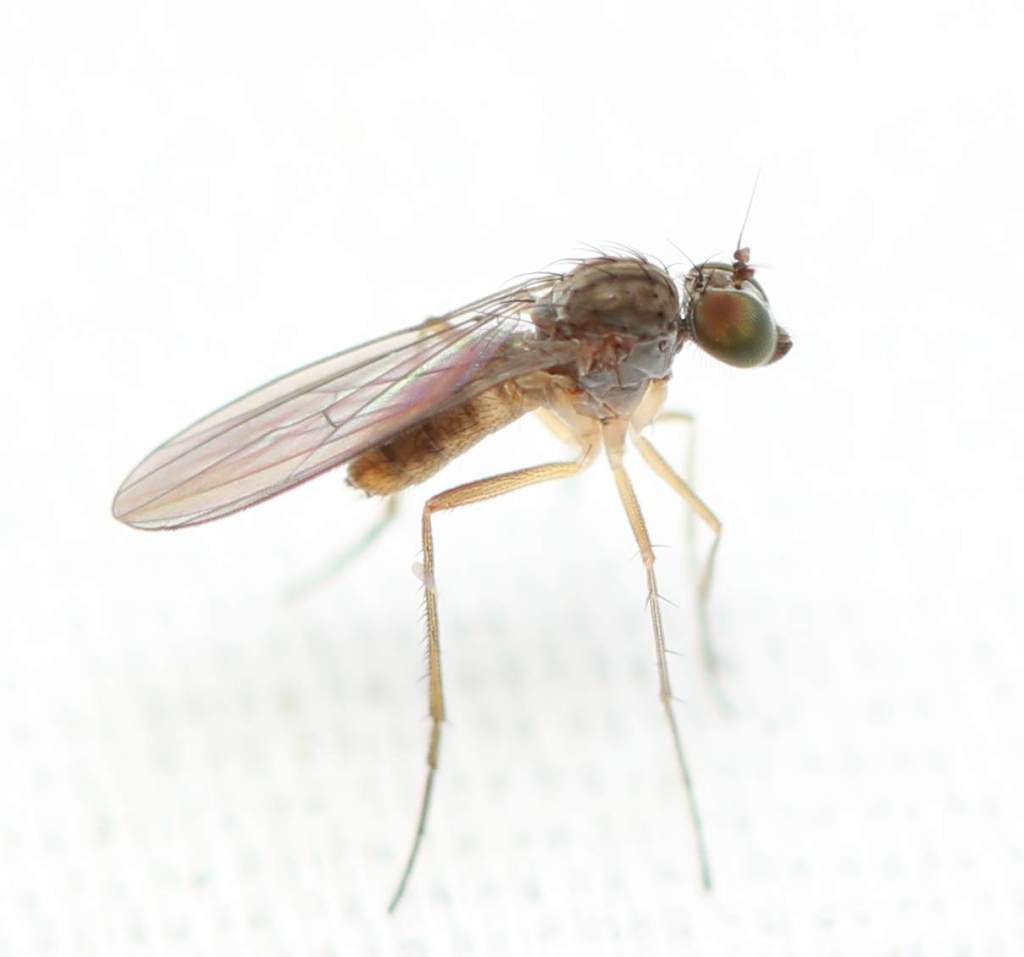
To kick off this document, I will introduce what was probably the dominant fly family on our rental property: Long-legged Flies (Family Dolichopodidae). Not only the numbers but also the species diversity of this unique and often overlooked family made them very prominent. From shiny, showy, metallic leaf skaters to dull, camouflaged, tree trunk-stalkers, these amazing flies could be found almost everywhere in the woods! This family can get pretty hard to ID, especially to species, so I will only identify some of them to genus here.
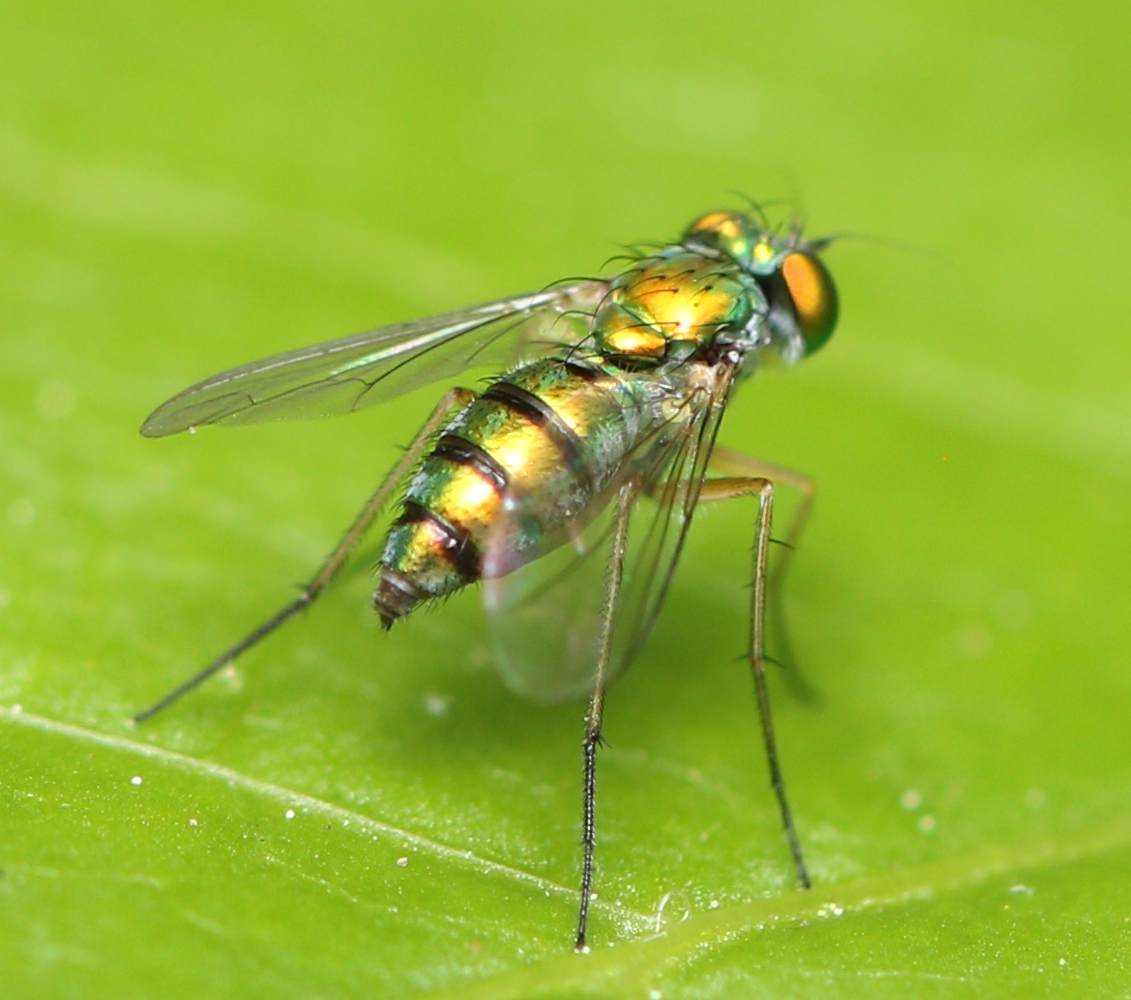
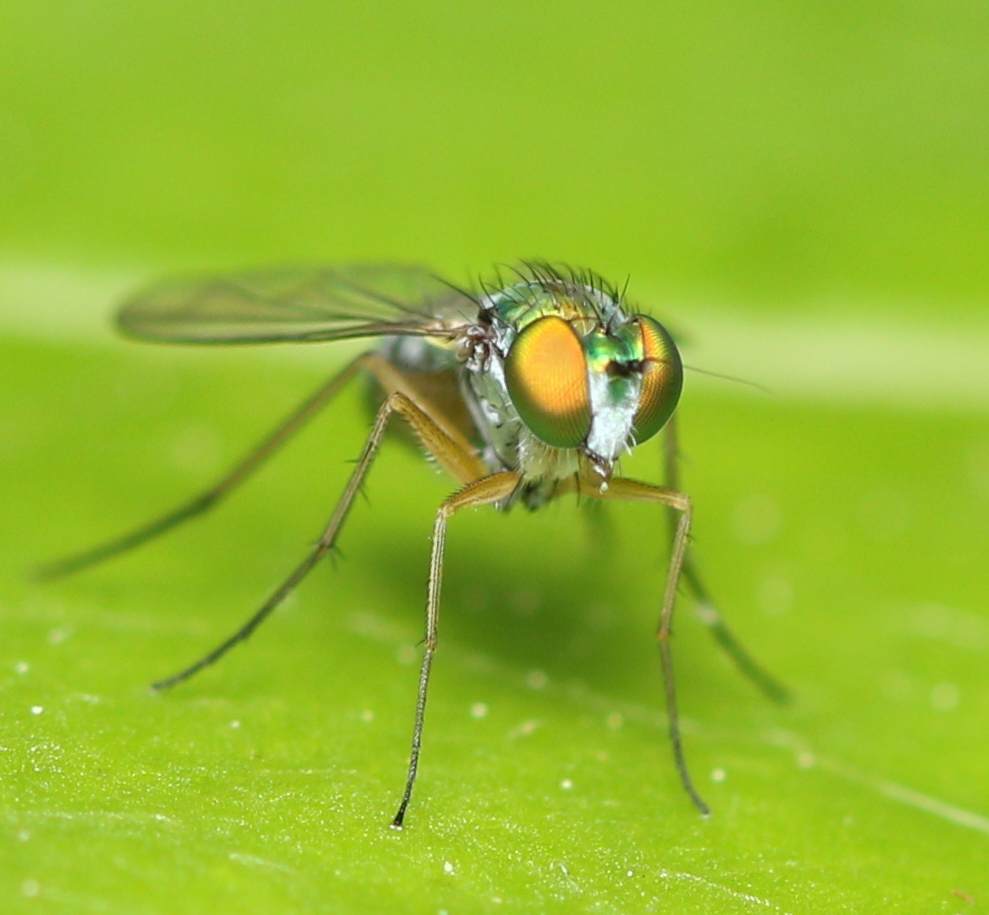
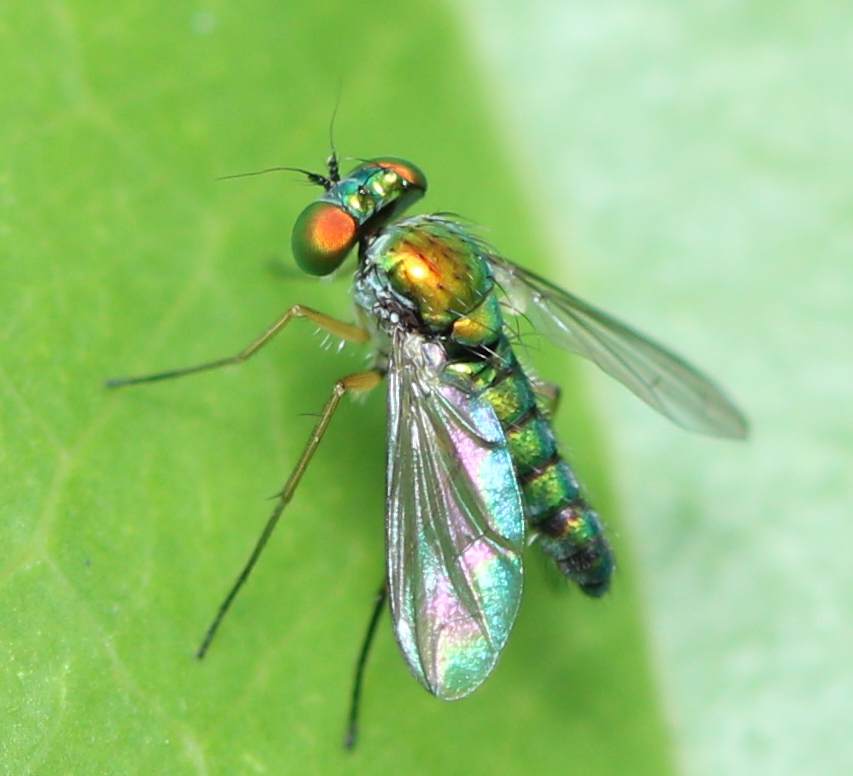
1. Genus Condylostylus
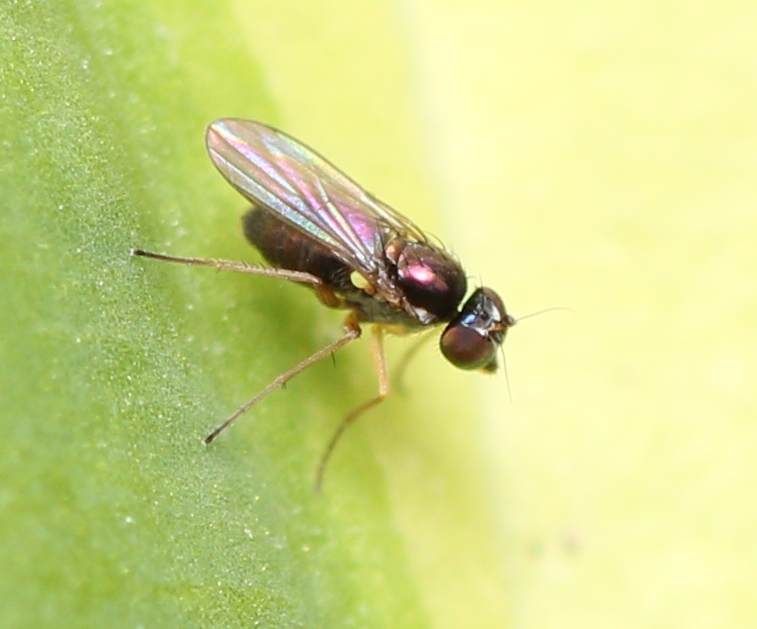
This genus of Long-legged Flies is by far the showiest, shiniest, and most conspicuous of any Dolichopodids in basically every habitat. These guys can reliably be seen skating around on sunny leaves on warm days, searching for some soft-bodied Arthropod to consume. They are often the most common and easily found fly in Maryland and likely all over the northeast. If you wanted to learn some common insects, this genus, Condylostylus, would be in the top ten I would introduce you to first. These guys come in metallic orange, bronze, red, green, and even blue colors. If you look for them, you will find them.
Like most of the rest of the family, Condylostylus are extremely light sensitive (the most light-sensitive insects I know of), making photographing them a bit of a nightmare. Each time I took a picture and the flash went off, the fly would leave its perch in a fright. Luckily, this family has a tendency to stay in the area and not fly far, but it still made getting good pictures an extreme challenge (which is why many of these pictures are not in good focus). I also have to be very careful about blocking the sunlight the flies are basking in; they move the second they sense they are no longer working on their tan.



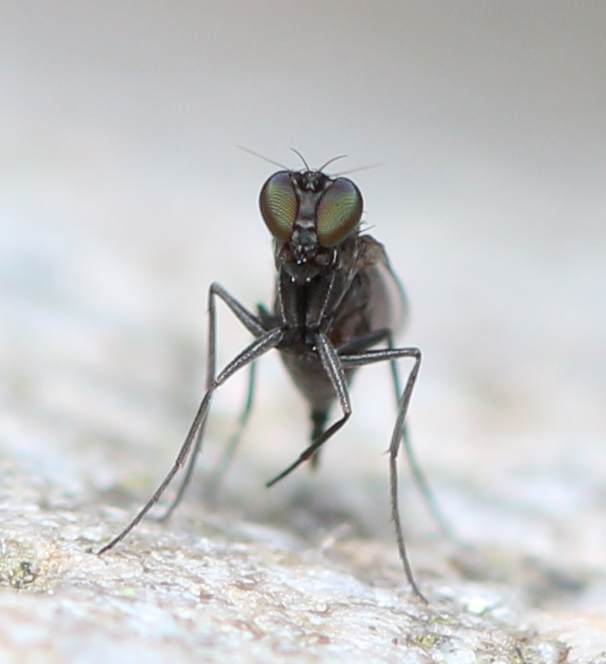
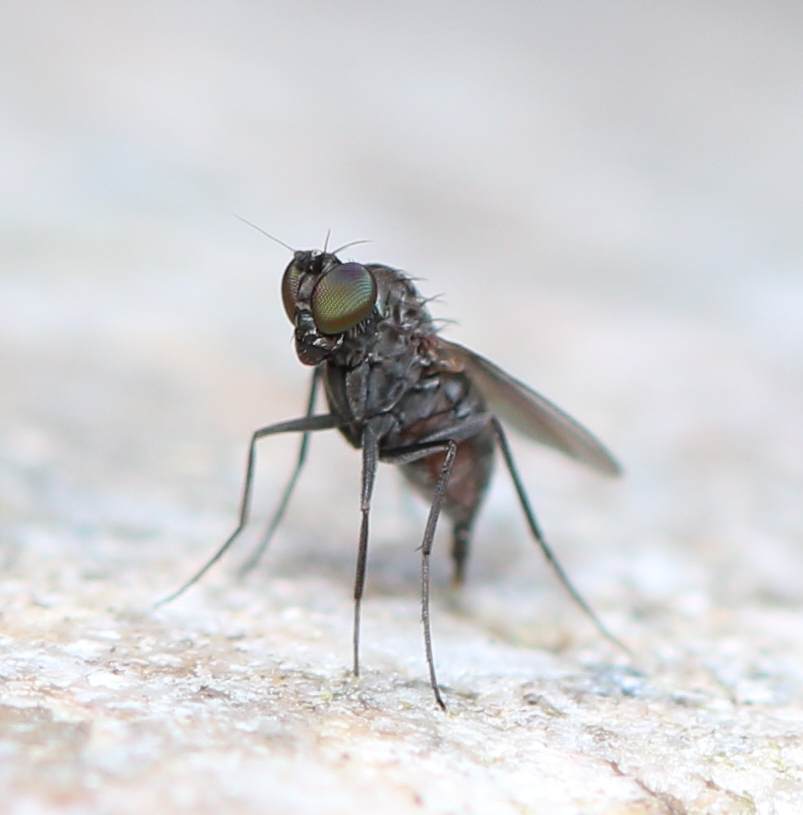
2. Woodpecker Flies (Genus Medetera)
Suddenly we leap from one side of the spectrum to the other; Medetera is almost the exact opposite of Condylostylus. These flies are extremely inconspicuous and usually seek shade instead of sunlight. They are gray and non-metallic and try their best to blend in with the gray bark of the trees they perch on. Unlike their cousins, they are ambush predators that rely much more on camouflage than on speed (though green Condylostylus may be utilizing a little camouflage with their green coloration on a leafy backdrop). These flies tend to stay very still, and are very good photography subjects until your flash goes off; that is, if you can cope with the angle. The favorite spot of these flies is an awkward three feet up on a tree trunk, perched with their heads pointed directly toward the sky (hence the name). When trying to get any kind of a decent side shot, a kink in the neck and an aching back is a clause in the job description. In addition, the poor lighting conditions that these flies like to hang out in, their tendency to move each time you take a picture, and their camouflage with their usual background make this genus a formidable challenge to the most experienced macro photographer. Getting a good shot of these flies is a rarity for sure! For reference, the shot above (first one featured) was the product of over a half an hour of snap-and-chase/repeat, and these images were literally the only passable shots out of 200+ I took.
I have seen these flies a couple times over the years on a few of our trees back home, but they remained a mystery and very scarce. Here they were abundant.



3. Hypocharassus pruinosus
This huge, beautiful fly was one of hundreds patrolling the small, narrow strip of muddy beach sliding into the bay at low tide. I have had basically no experience with coastal flies, so seeing my first H. pruinosus was a thrill! This species is pretty common all along the east coast, and is the bully of the shores among the many smaller beach long-legged flies. This species gave me an entirely different type of photographer’s challenge than the last genus. Here, the chief challenge for me was moving at all without scaring the fly away. Secondarily, the strong sunlight on the reflective silvery dusting gave me a lot of lighting and focus complications. After getting a few poor shots in the field I gave up and netted one for photography inside.
This species is probably my second favorite find from this family to date. I love how with the right angle (below) will make this species’ unique forked antennae look like sinister eyebrows. I also think the clouded reflective look is very captivating. I suspect that it serves as a sort of camouflage against the semi-reflective wet mud. What an amazing piece of divine artwork!
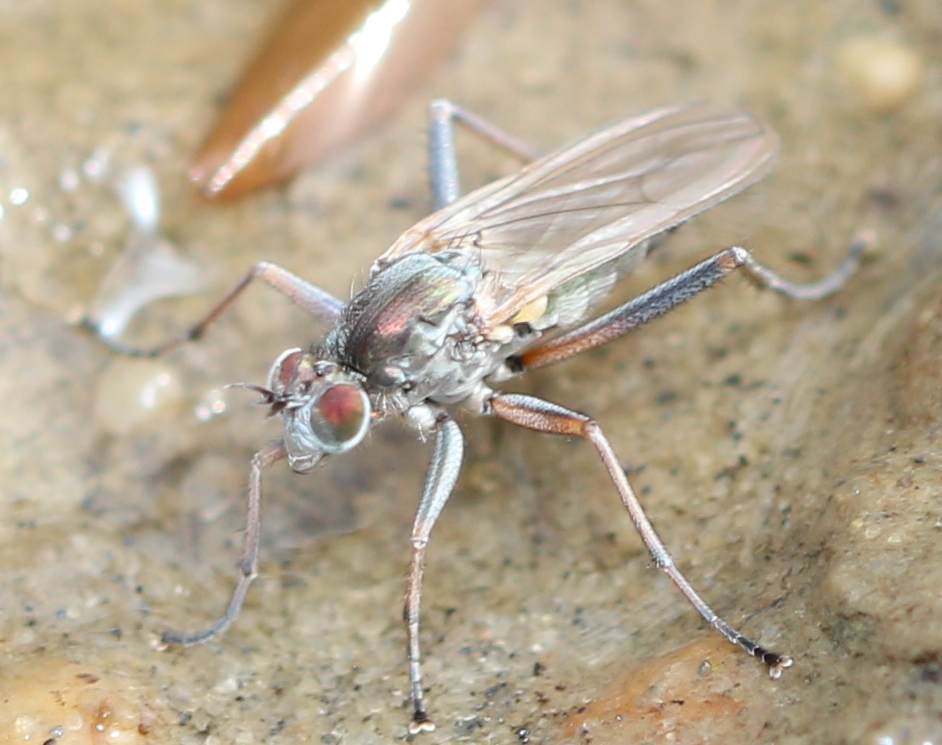


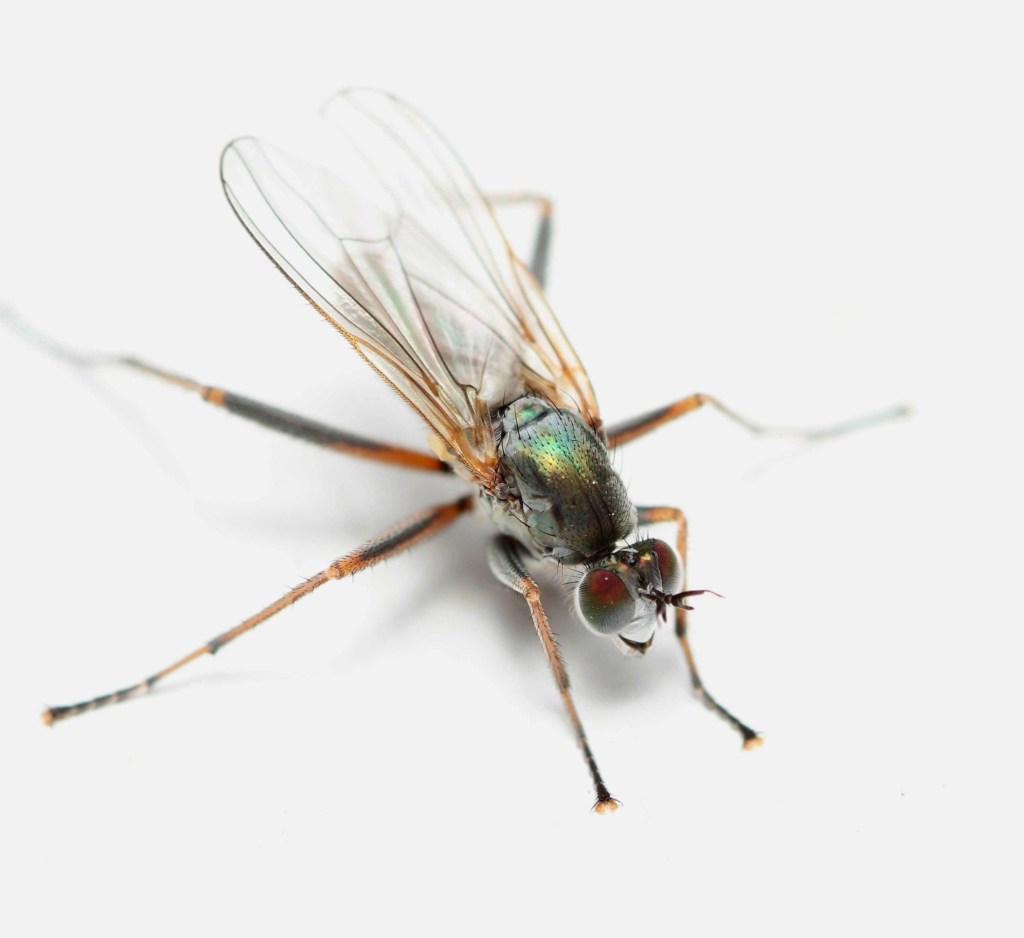
4. Other random assorted Long-legged Flies (Family Dolichopodidae)
Most of these other Dolichopodids are with the woodpecker flies and prefer to maintain a low profile. Luckily for me though, most of them do like to catch some sun so I didn’t have to look underneath leaves or anything. Even so, for some of them, I had to put a good deal of time getting into some extremely odd and uncomfortable positions among various bushes to get to a particular sunny leaf; a passerby would probably have thought I had either lost my wallet or my marbles!
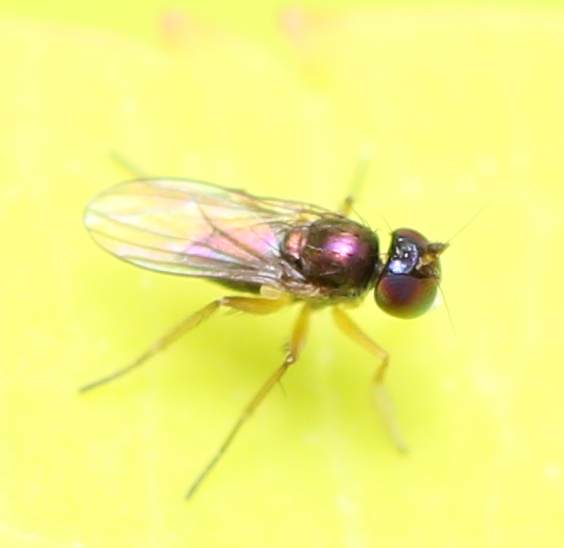
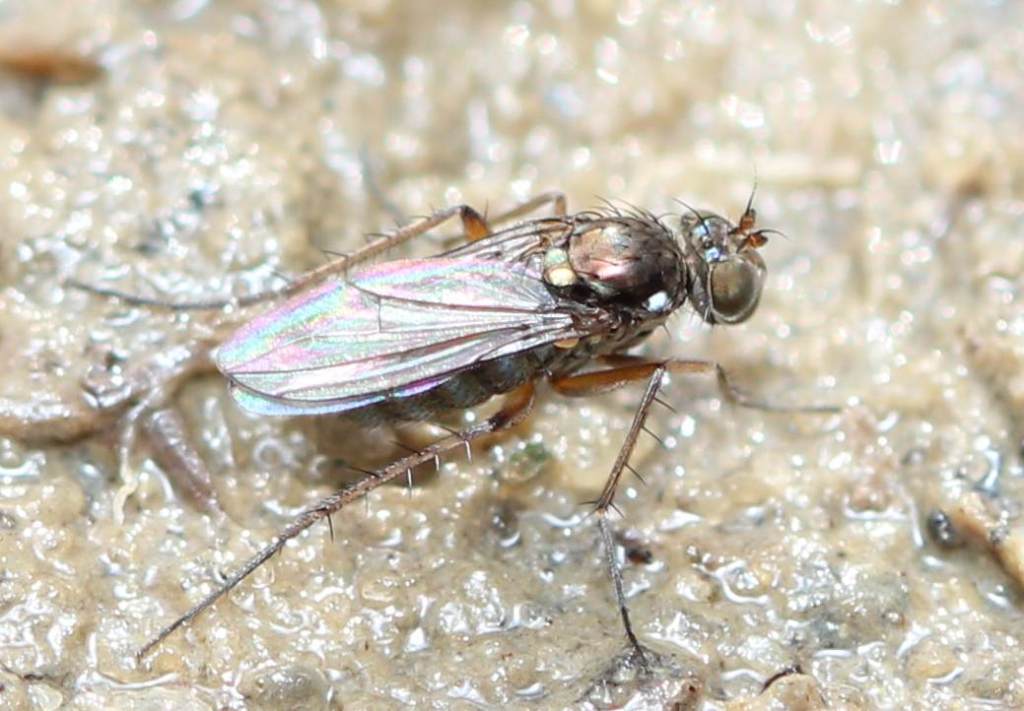



5. Deer Flies (Genus Chrysops)
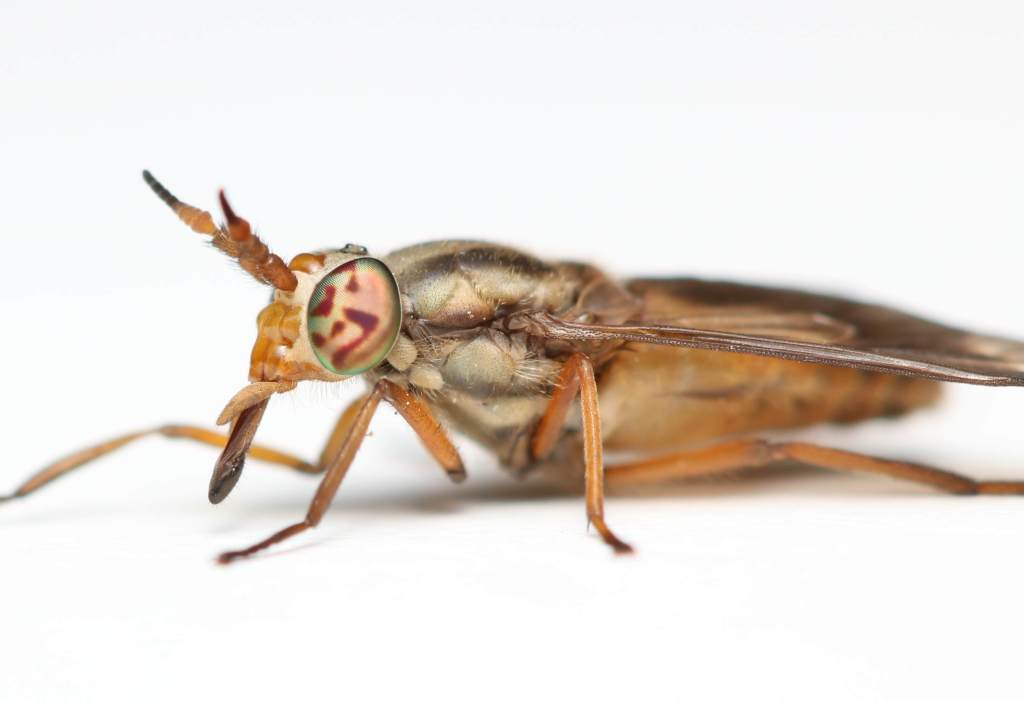
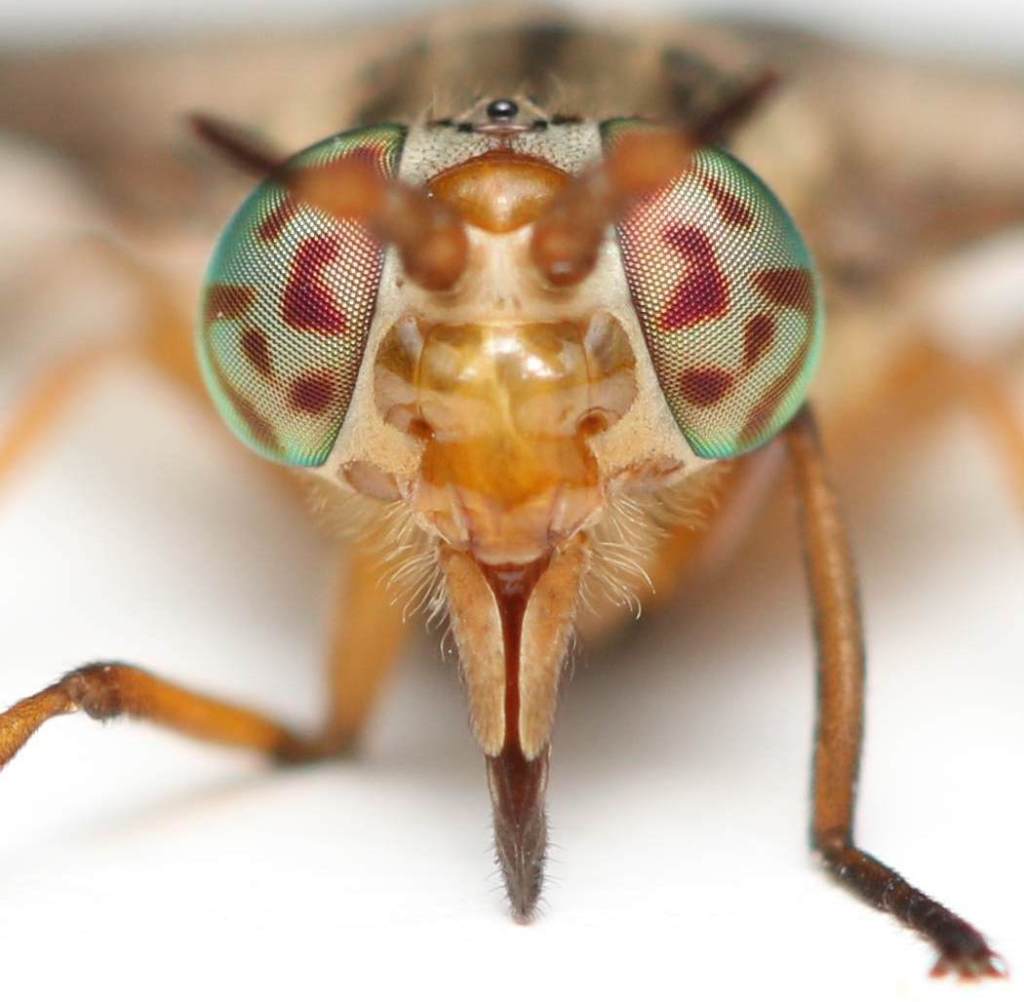
Members of Horse and Deer Flies (Family Tabanidae)
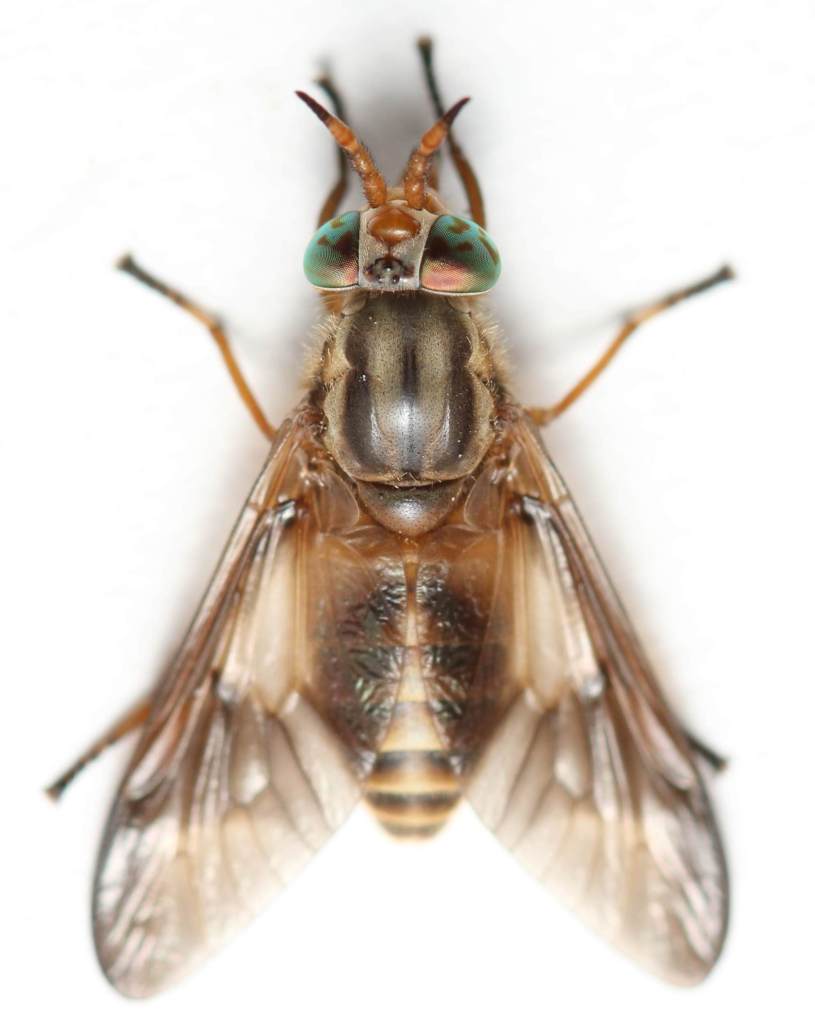
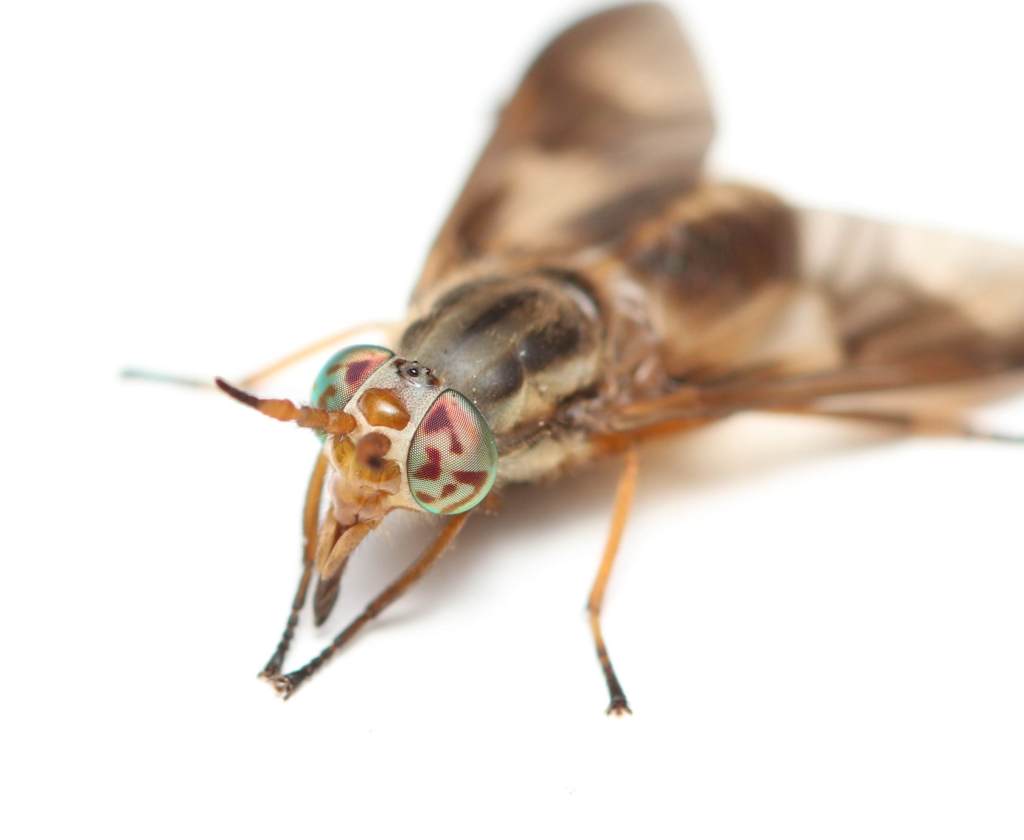
While these deer flies were everywhere, I found this happy couple on our blacklight, side-by-side and decided to make them the subject of a good 150 photos. They behaved admirably and posed like a pageant king and queen!
The fly on the left (in the picture to the left) is the female, distinguished by the widely spaced eyes, and the rightmost individual is the male, distinguished by the huge, touching eyes. In many flies, whenever there is sexual dimorphism, closely set or touching eyes is the primary and most reliable way to diagnose the male from the female, whose eyes are set farther apart. Deer flies tend to have very striking eyes, and this species, whichever it is, is no exception. The coloration, especially of the male’s eyes, was unfortunately not fully captured in these photos. You will have to see them for yourself to really *appreciate* them; look for them biting your arm, and just admire the eyes! 😉
I attempted to get (very) roughly equivalent shots of the male and female for the comparison below. See if you can spot any sexually dimorphic characters besides the eyes…





Next up is a short list of some of the other flies I often/sometimes spotted on the low leaves of trees and bushes in this unassuming insect Eden.
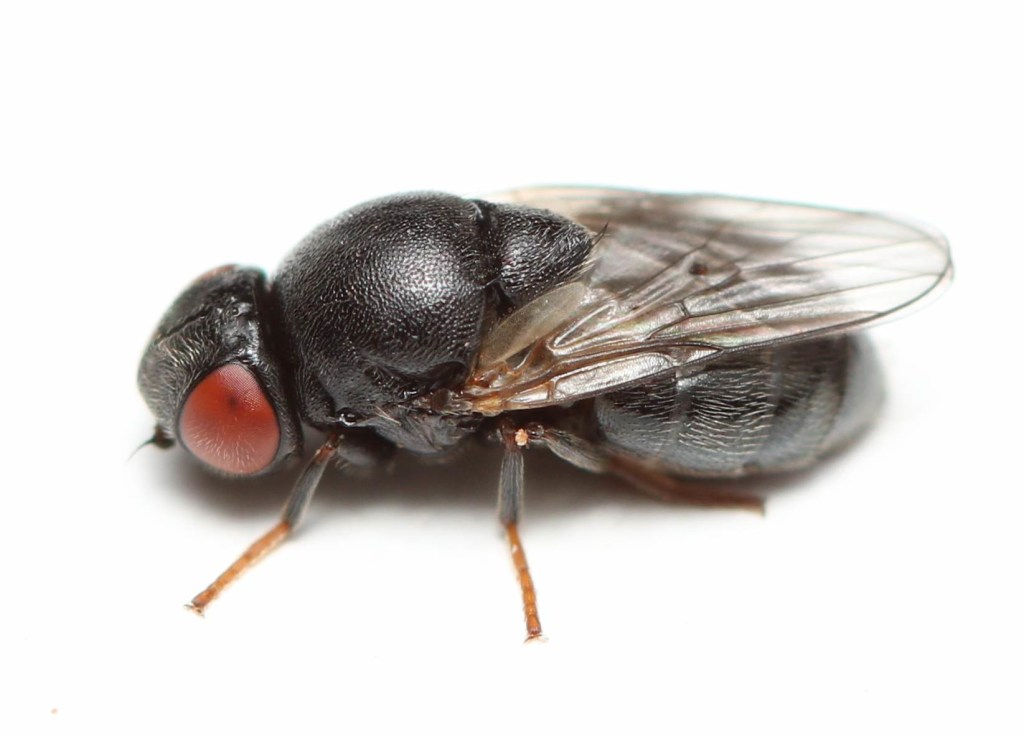
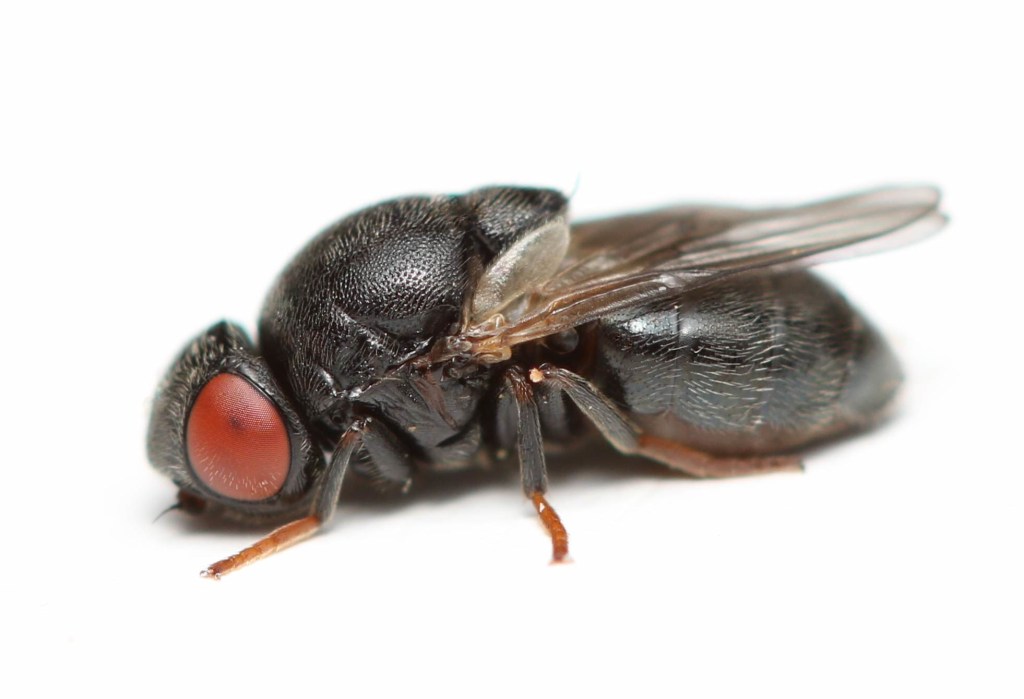
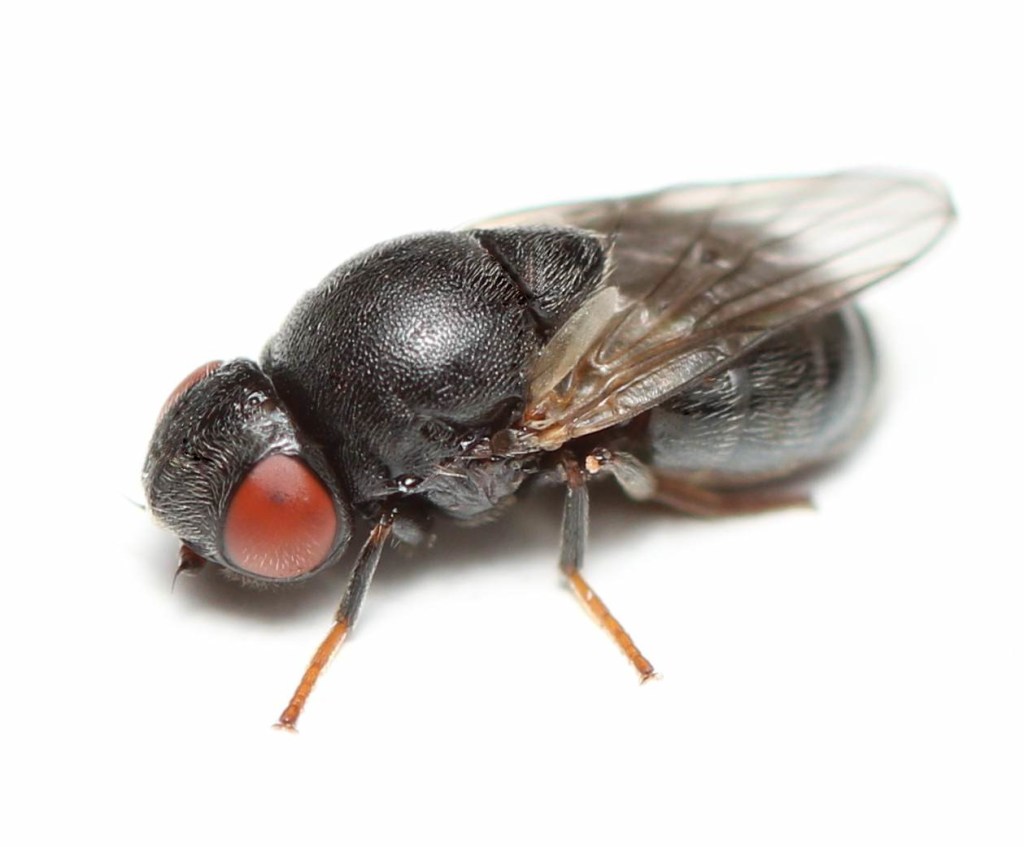
6. Leaf Miner Flies (Family Agromyzidae)
These little, unexciting black flies are members of one of my top five fly families. They are common, but often very hard to find. They are very secretive and will usually immediately zoom underneath leaves as soon as they sense a disturbance, meaning they will usually be out of sight before I have the chance to see them at all. Their larvae are laid in leaves and feed on the tissue, completely enclosed between the top and bottom layers of the leaf. They leave trails of hollow leaf that can be seen long after they pupate and emerge, which can actually be used to identify the species based on plant species, pattern, width, shape, etc. by a few very talented experts (not me by any stretch!).


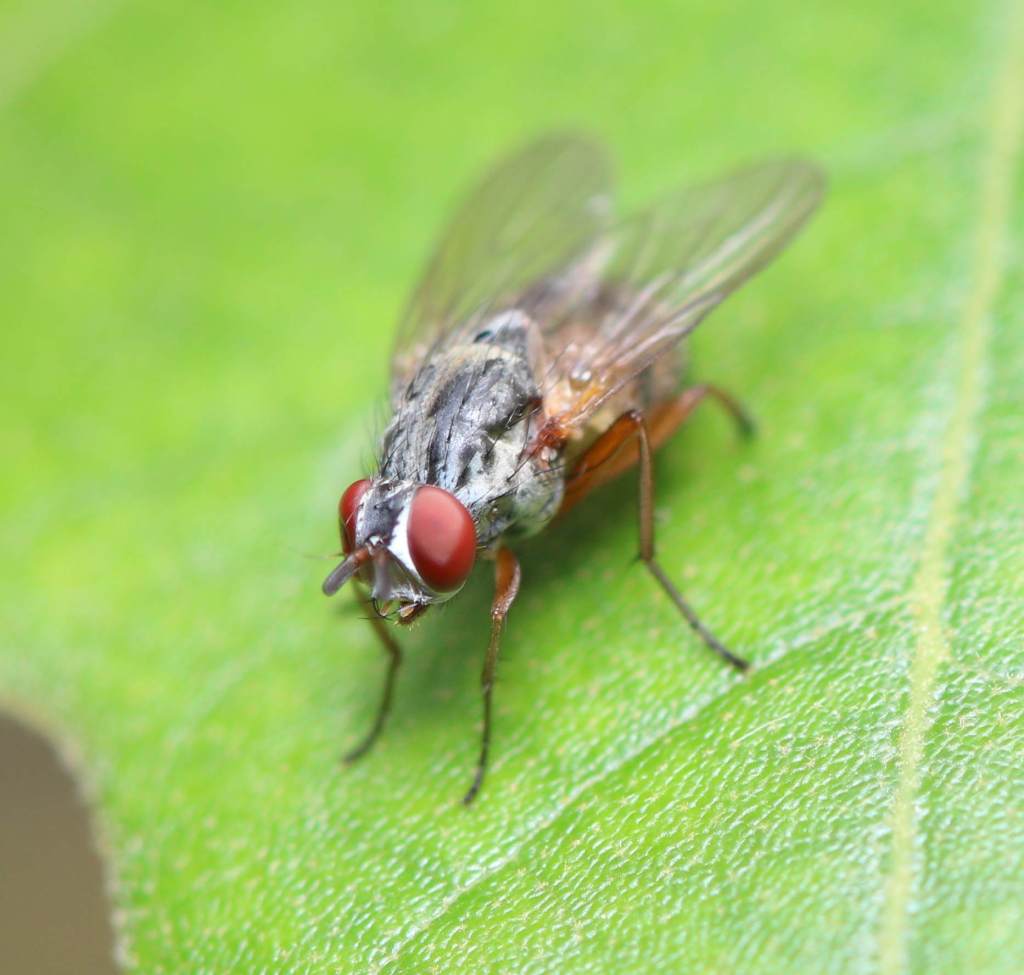
7. Calyptrate Flies (Calyptratea)
There were dozens of these mundane-looking flies, comprised of at least five species, sitting on leaf edges greeting me each morning as I walked through the woods. This huge group, including almost all the ‘big, ordinary-looking flies,’ is extremely hard to identify even to family often, and members are common in virtually all habitats.


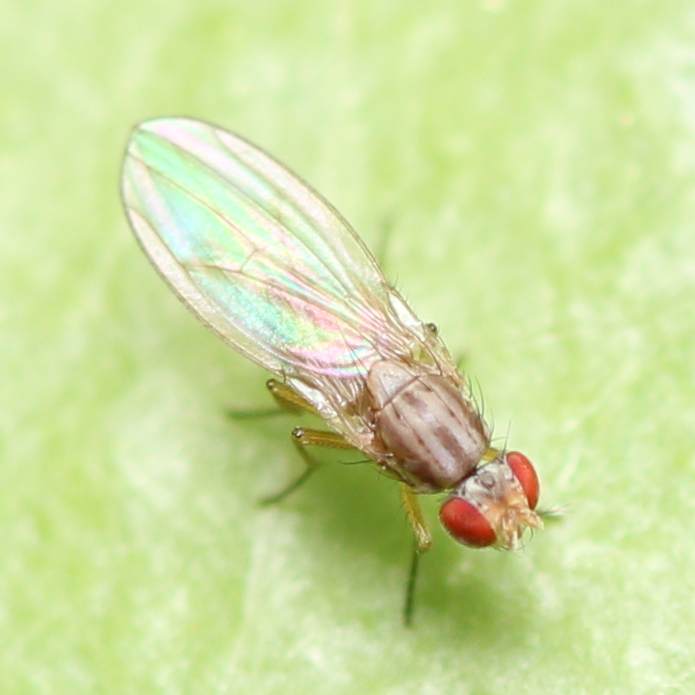
8. Vinegar Flies (Family Drosophilidae)
These dainty little flies were common to see sitting or gently floating across the leaves in both shade and sun. A variety of species are common at home as well, but often hard to get pictures of because of their wariness.
Drosophilids (while outdoors) are usually on the hunt for sugary honeydew excretions from aphids, treehoppers, and other small plant-sucking insects, which often dot the lower leaf levels. This sugary rain is the life-source of many arboreal flies, beetles, and ants.
These two were the only vinegar flies I managed to shoot on the trip, and they really didn’t stick around too long; I had to be content with what pictures I could get.


Now we move on to the trashy stuff, literally! Trash cans are often a superb place to spot interesting flies, if you can abide the smell. I tried to drop by the trash cans every day, and almost always spotted something interesting. There were always things I did not expect. The following flies are just a sample of the variety present in, on, or around the trash cans.
9. Bluebottle (Genus Calliphora)
A member of Blow Flies (Family Calliphoridae)
Bluebottles were everywhere on the trash cans, as might be expected. These flies never sat still for me when I tried to maneuver my camera to get a side shot though.
I have recently become unduly enamored with blow flies, and have been working on learning their habits and characteristics. For example, I have been seeing that bluebottles generally hang out around trash cans much more than the more common greenbottles (Genus Lucilia).
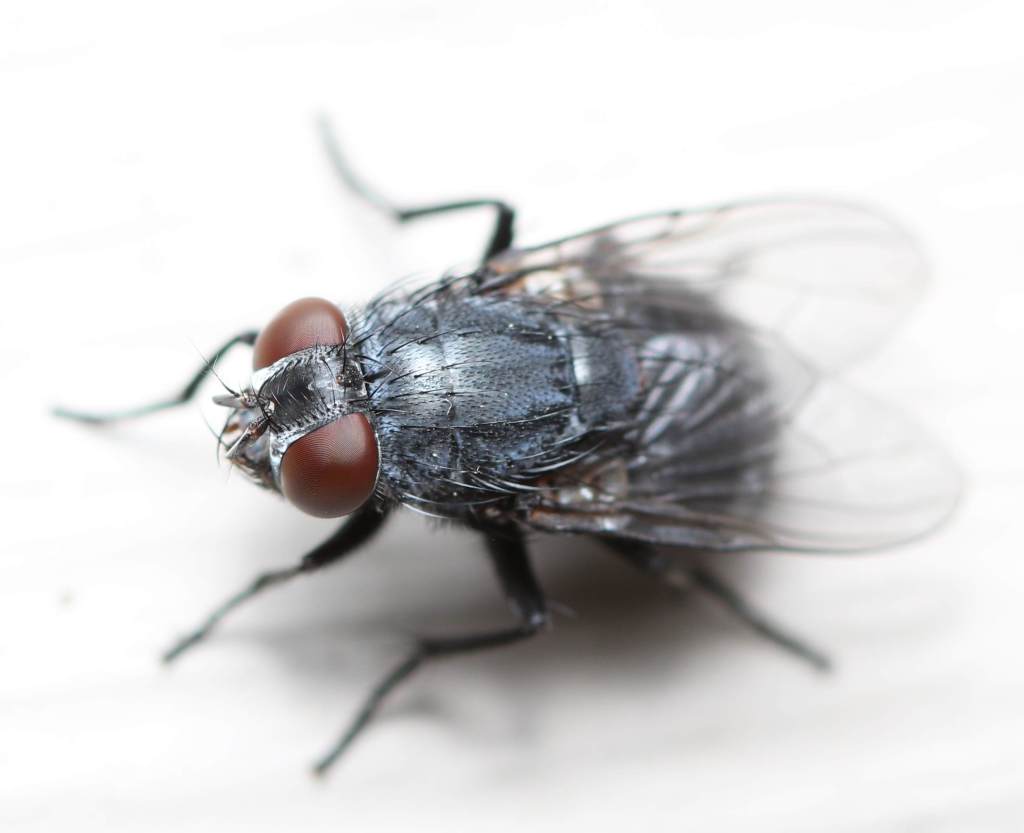
10. Lesser Dung Fly (Family Sphaeroceridae)
These little flies are at almost every gross opportunity, although you will probably not immediately notice them. They are not much to look at, but they are probably at least as common as blow flies and can usually be found in the same places.
Sphaeroceridae is a family not well known currently, and they are often very hard to identify past family from pictures.

11. Rainieria antennaepes
A member of Stilt-legged Flies (Family Micropezidae)
For me, seeing this fly on the trash cans was quite a bit of a surprise. At home I see these large but dainty flies commonly sunning themselves on logs or nearby leaves. They flick their two front legs before them as they move, apparently mimicking Ichneumon wasps who often have a white segment near the end of their antennae. This fly is an impressive mimic (I know from field experience with Ichneumon wasps).

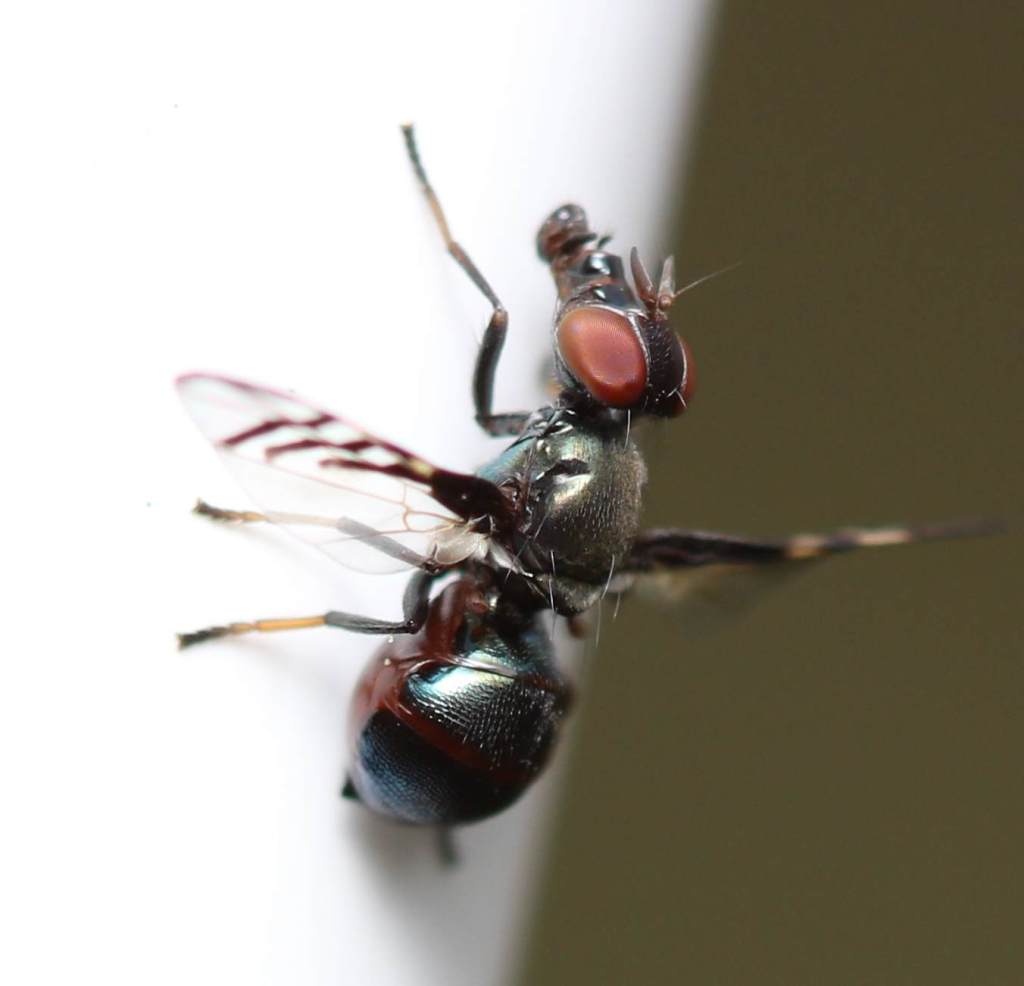
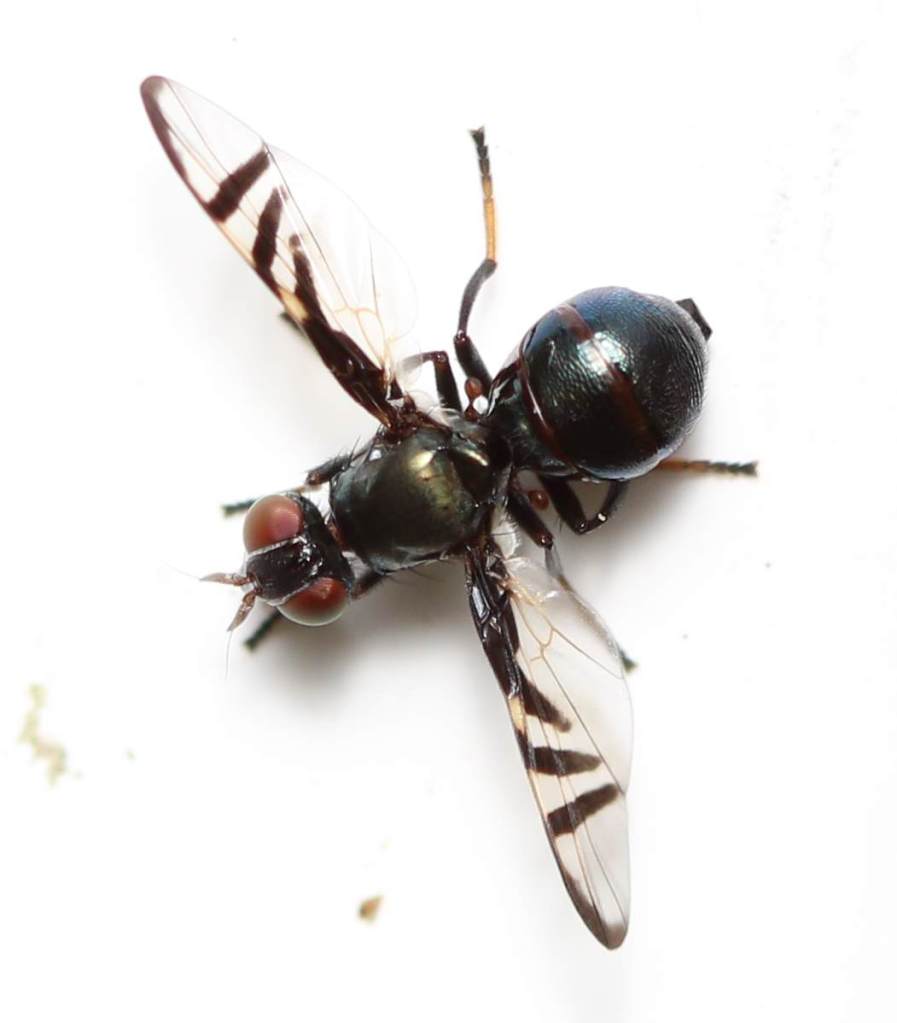
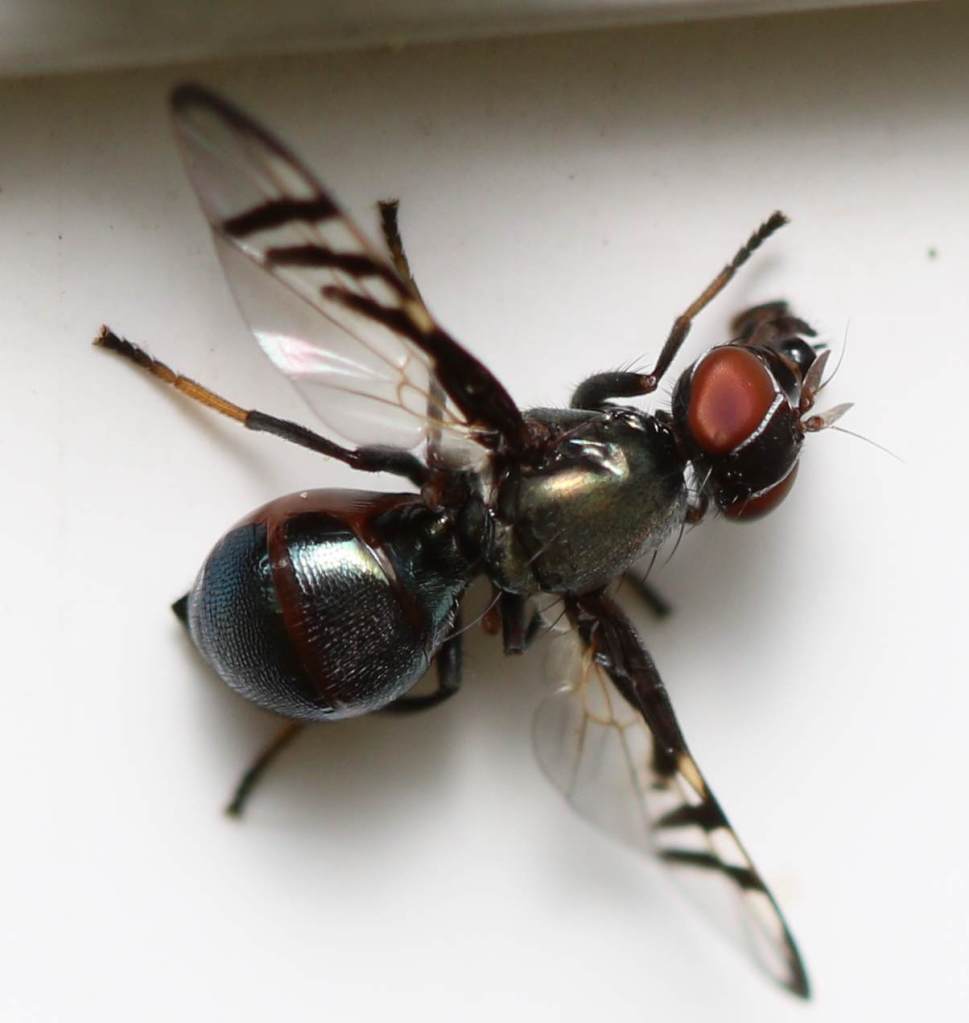
12. Rivellia variabilis
A member of Signal Flies (Family Platystomatidae)
Yet another beautiful fly in a not-so-charming place! Look for signal flies with striped wings like this one on sunny logs or tree trunks in the summer, unless you are lucky enough to see them as you are taking out the trash!
Signal flies are so called for the patterning on their wings, which they flick as they walk; almost seeming to communicate with some invisible counterpart. These flies are relatively common, and are often attracted to fresh dung. Mmm…tasty, right?
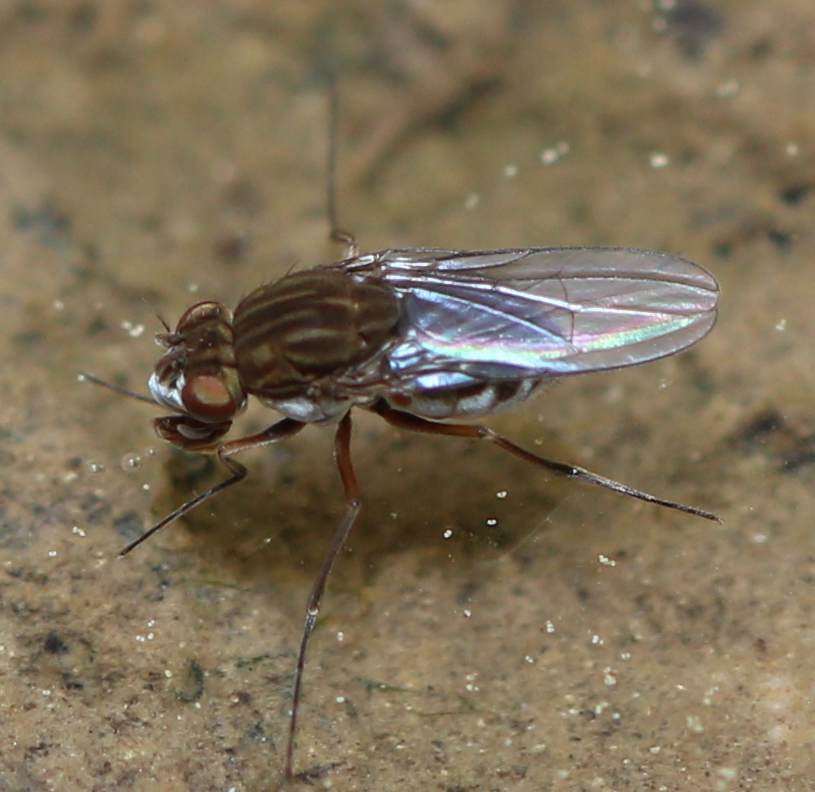
13. Genus Brachydeutera
A member of Shore Flies (Family Ephydridae)
And finally, last but not least, is this little shore fly skating around on a small puddle close enough to the trash cans to count as a trashy fly. This water-skating fly is very common, but so far I have never been able to spot one. This genus is characterized by the white lower half of its body, and while it may look like a water strider from a distance, it is an entirely different type of insect. The long wings should be a big giveaway for these guys being flies…
And right on the heels of the trashy flies are the golden finds: the coolest Dipteran finds of our expedition.
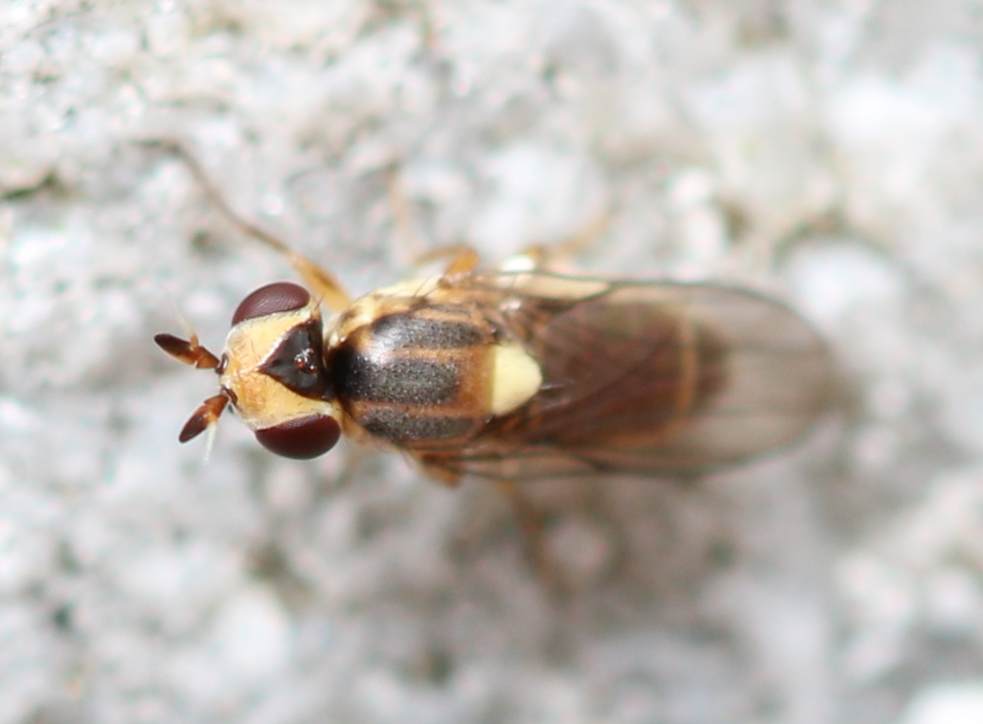
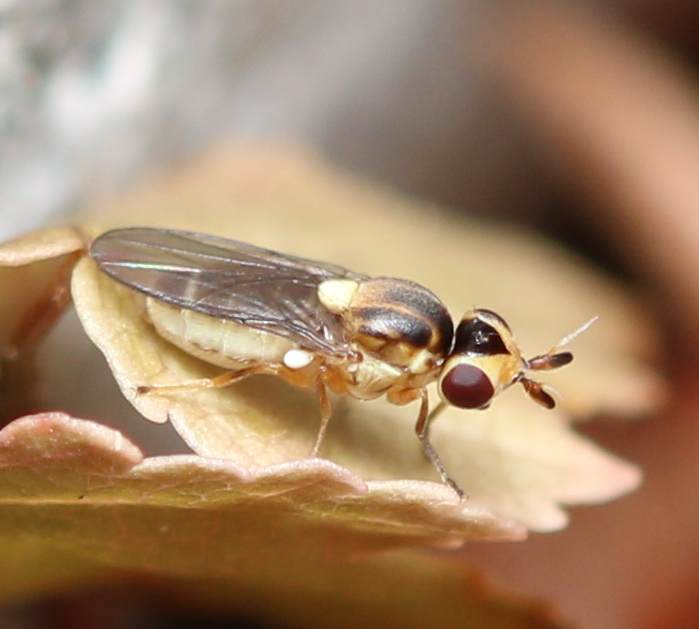
14. Genus Chlorops
A member of Grass Flies (Subfamily Chloropinae), a member of Frit Flies (Family Chloropidae)
This family is another fly family in my top five. The flies in this family are almost always colorful and interesting, and this year we have already found at least six new species and genera for us. This is one of those new genera.
These flies are very secretive, and in my experience the best places to find them are either on the underside of broad leaves during or right after a light rain or on people, attracted to their sweat.


15. Genus Parochthiphila
A member of Aphid Flies (Family Chamaemyiidae)
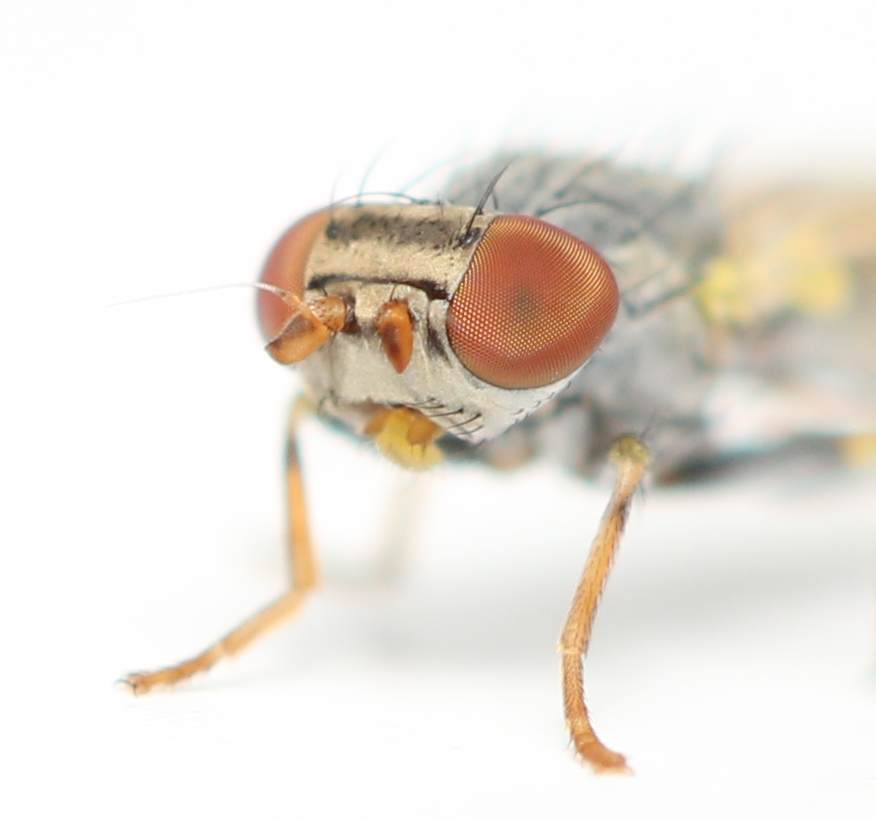
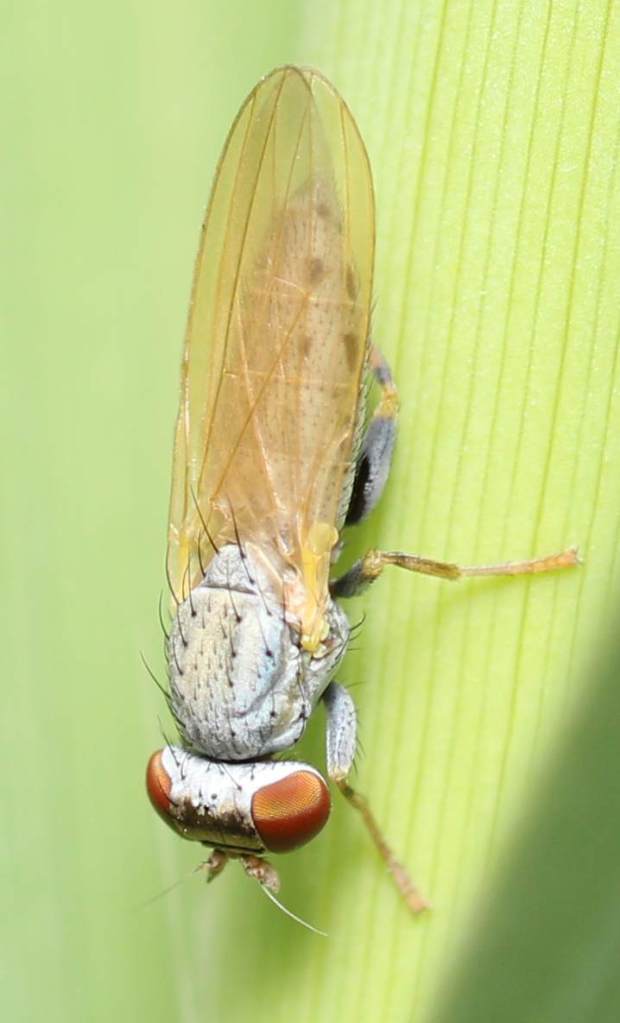
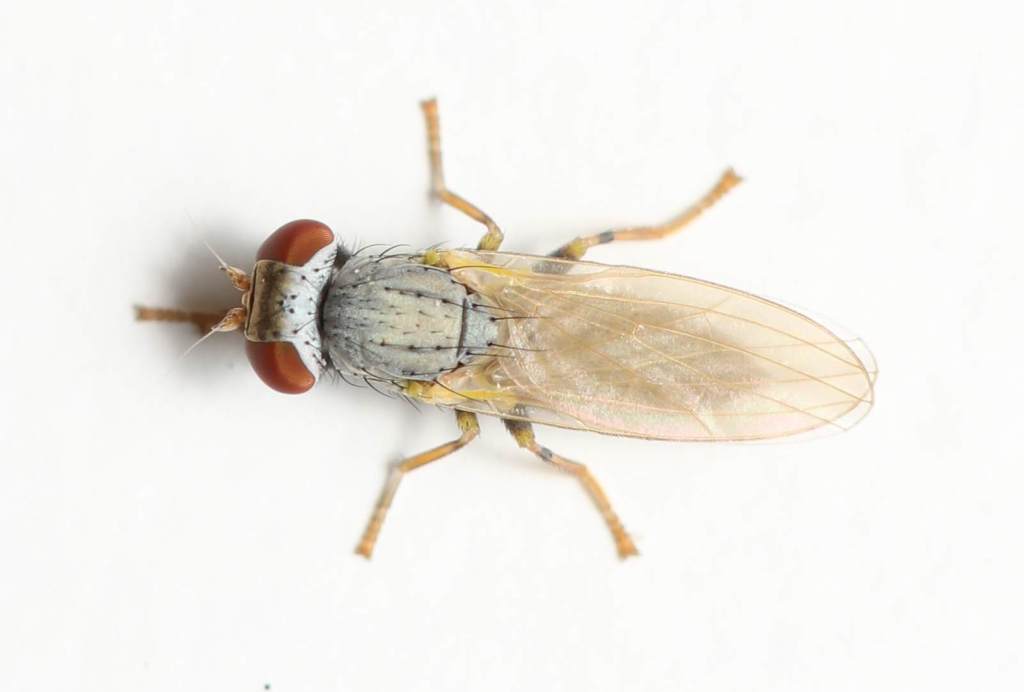
Aphid flies have always been one of those tiny and fairly unknown fly families that I have seen in passing but never dreamed of finding myself. I actually had no idea what this cool fly was that kept appearing on the rushes by the pondside at first. It was not until getting home and researching it that I found out what it was. Aphid flies are very uncommon to run across, and this genus is one of the more unknown and under-documented genera in the family.
The larvae of this family feed on aphids and scale insects, which is obviously how they get their name. The adults do not come to flowers or really any other type of food source, so finding one is really just by chance. I have absolutely no idea why a population of this genus seemed to haunt the riverside rushes, but I am not complaining!
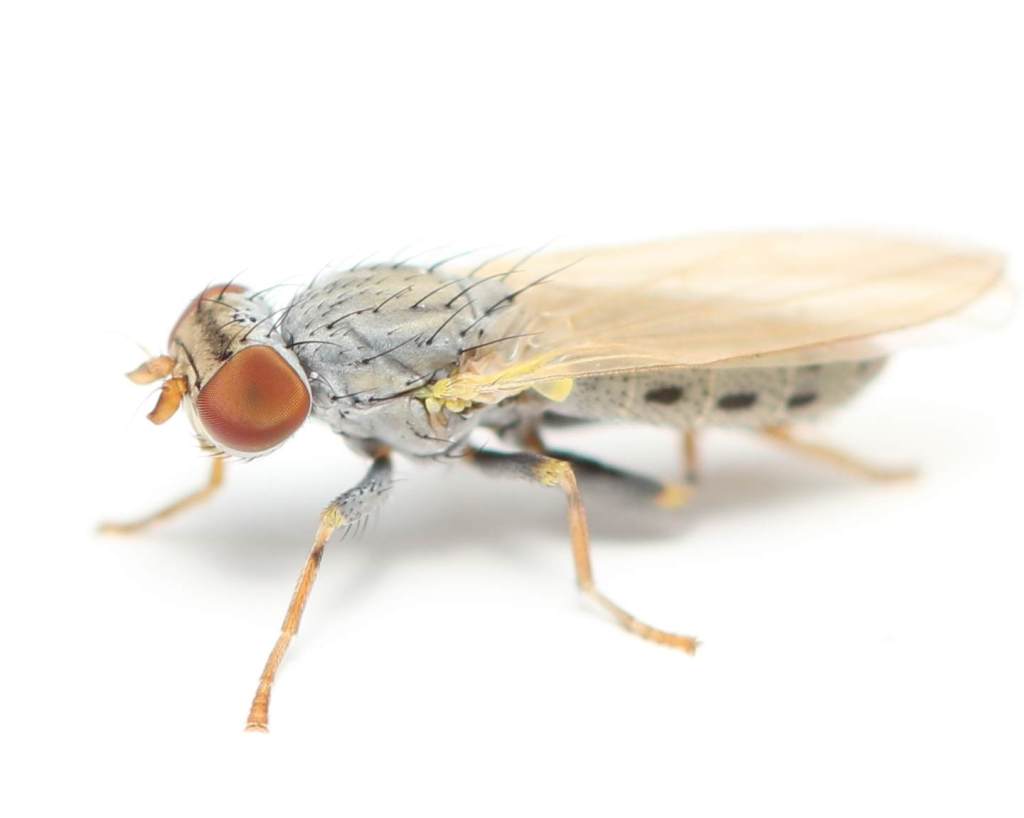


16. Likely Sphecomyiella valida
A member of Scarab-pursuing Flies (Family Pyrgotidae)
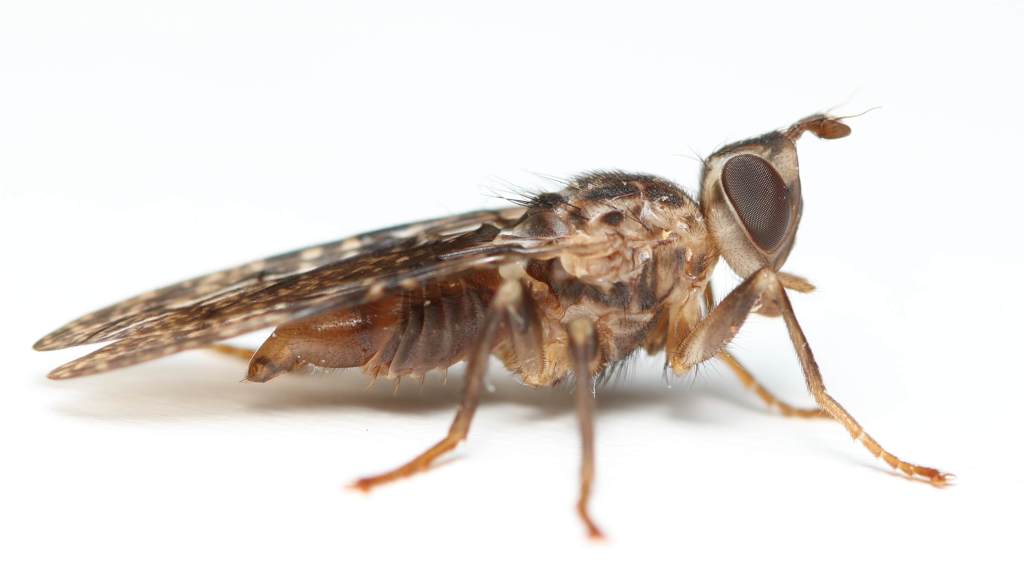
This huge fly showed up at our blacklight one night, and is my favorite insect that ever did so on the trip. This small family of large flies contains only four species in our area, and Isaac and I have already hit one of them: the Waved Light Fly (Pyrgota undata) – picture on the bottom right. These flies are not common finds, and the most reliable way to find them is at lights at night.
The name ‘scarab-pursuing’ comes from the female’s habit of pursuing a scarab beetle in flight and parasitizing it with a single egg while in midair. Yikes!


17. Genus Calamoncosis
A member of Frit Flies (Family Chloropidae)
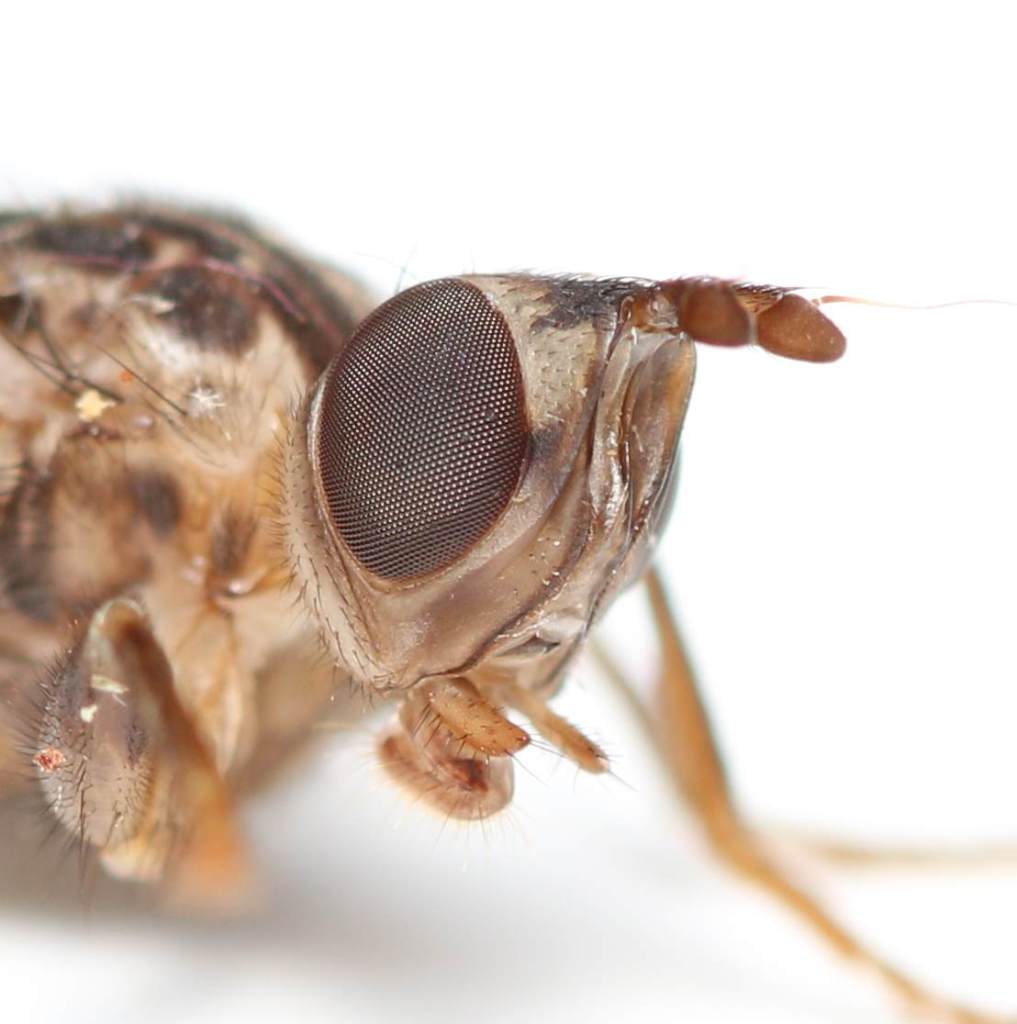
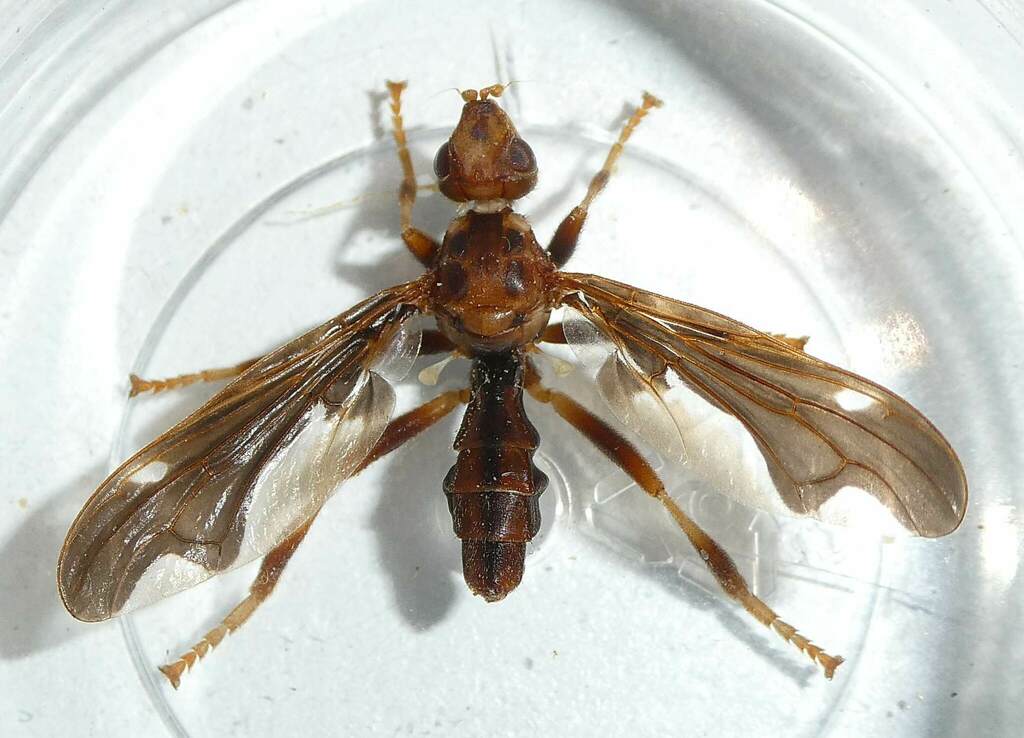
Yet another member of this amazing family of obscure flies (see #14). This specimen was huge for its family, at around 1 cm. Just like #15, I had absolutely no idea what I was looking at until I researched it. I can usually tell at least family at a glance, but this fly was so odd-looking and uncommon that I could not match it with a family by appearance and I had never seen pictures of this genus before.
Isaac found this fly by sweeping his net into the rushes to get something else, and found the rare pondside-lurker in his net by complete accident!